
Early in my teaching career, Brain Gym was all the rage. Those 2-3 minute activities, designed to get learners moving and crossing the midline, were supposed to boost focus. While it felt like just another educational fad, something resonated with me. I saw the value in getting kids moving. Years later, as a Kindergarten teacher, I began to understand why. I learned about the importance of core strength for writing and sitting, and I discovered the power of multisensory learning. We incorporated movement breaks (Go Noodle is a fantastic resource), and I thought I was doing enough. I was wrong.
My real education began when I met a young learner I’ll call “Sunshine Bug.” She had a remarkable ability to notice and appreciate the natural world around her, and her smile was infectious. In kindergarten, she was the child who hugged my legs during story time and joyfully embraced every messy activity. I had the pleasure of teaching her again in second grade. This time, she cartwheeled and twirled through the classroom instead of simply walking, and she spent recess lying on her stomach on the swings. One day, she shared something that profoundly shifted my perspective: the world, she explained, was always in motion, and unless she moved with it, things didn’t make sense. It was as if everything was spinning unless her feet were in the air or she was receiving a hug. That moment was a turning point. Working closely with her parents, we implemented several strategies: frequent swing breaks, a weighted blanket, wiggle seats, and a self-massage routine. Just as these supports were taking effect, the COVID-19 pandemic hit, and we were all thrust into the challenges of online learning.
Since then, I’ve been integrating everything I learned from my previous students. And it worked, mostly. Until this year. This year’s second grade class class has been one of the most challenging I’ve ever worked with, but it’s also been an incredible opportunity for growth. Many learners needed intense support to focus and be ready to learn. They struggled to stay in their seats, keep their hands to themselves, and their pencils were either being chewed or used to build miniature towers while they tried to listen. It has taken all the classroom management tools I’ve added to my toolbox over the years to establish routines, but some learners needed more. That’s when our learning support teacher visited. She recommended a sensory diet intervention for some of our learners. We talked through our ideas and decided to add yoga balls as alternative seating and create a choice board with 12 sensory integration activities. Learners would choose three activities to complete each day, in addition to the whole-class movement breaks we already did.
I researched sensory diet choice boards and eventually created my own using Canva. The activities range from playing with play dough and rolling on a yoga ball to blowing bubbles and doing yoga. I also incorporated resources like Coach Corey Martin’s Jump Battles and a fantastic 7-minute HIIT workout from He’s Extraordinary ( a great site with so much information and loads of free resources). This combination of activities helps address a variety of sensory needs.

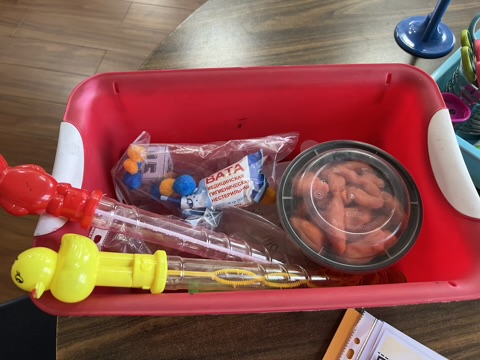
I cut out and laminated the choice cards. I added little velcro dots so they can be stuck onto the choice board. I usually change the choices available once a week. Students can then choose three activities during their session. As an activity is completed, they can move the card to the completed section. I’ve gathered all the materials in one place and I’ve added a little sand timer to the box to put a time limit on some activities.
It’s still early days, but I’m already seeing positive changes. Learners seem more focused, and there are fewer disruptions. It’s also interesting to observe the choices of activities learners choose as they learn to listen to their body and what it needs. Naturally, we have not been able to implement this for everyone in the class, but other learners have benefited from the flexible yoga ball seating and it has given me some insight into their sensory needs too.
It’s been a journey, from my initial understanding of movement in learning with Brain Gym to recognizing the complex sensory needs of my students. This experience has reinforced the importance of continuous learning, adapting to individual needs, and seeking support from colleagues.
Now, I’m sharing my sensory diet choice board with you! I hope it’s a helpful resource in your classroom or home.
What are your favorite sensory activities for kids? Share your ideas in the comments below! I’d love to hear from you. And if you found this post helpful, please share it with other educators and parents!
 Honor Learners